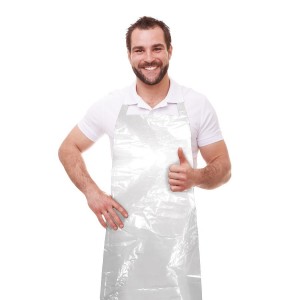
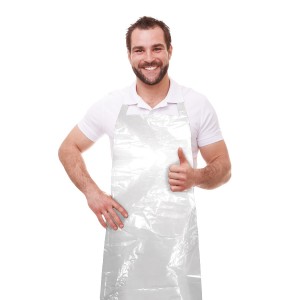
Disposable aprons, especially at a time when hygiene has become such an essential factor, have become one of the key items of single-use clothing to prevent cross-contamination in various sectors. Disposable aprons protect us both from external elements that may adhere to our clothing and from those we carry ourselves, which could compromise the quality of our work.
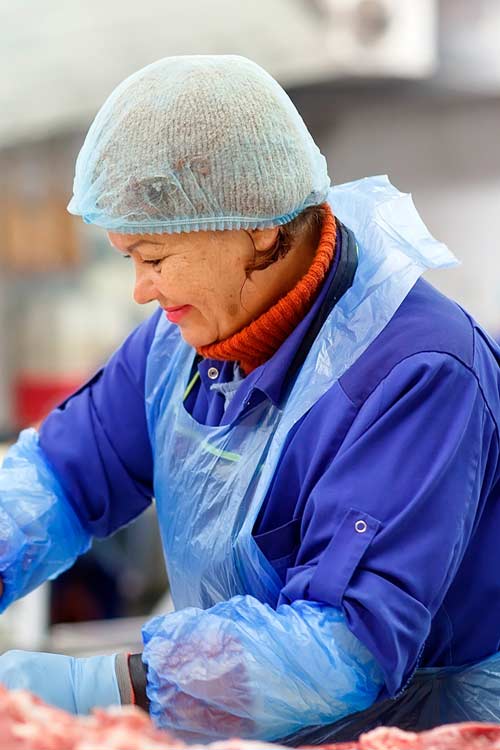
For this reason, disposable aprons are particularly recommended and commonly used in the Food Industry, Hospitality, and Food Handling; although it is also quite common to see them used in beauty and hairdressing services.
The materials used to manufacture these aprons may vary, such as Polyethylene or Laminated Non-Woven Polypropylene. In both cases, the material is hypoallergenic, and both fulfil their main purpose: protecting the user while performing their work and ensuring optimal hygiene conditions.
Storage and use of disposable aprons
A major advantage of disposable aprons is how easy they are to store, requiring only a dry place at temperatures between 10º and 30ºC in their original packaging, while avoiding direct exposure to sunlight. In addition, thanks to these single-use items, we can forget about the hours of washing required with reusable aprons made from other materials such as fabric.
The fact that these aprons are single-use does not mean that, by using them for our work, we are harming the environment. All plastics and cardboard components of the product are 100% recyclable, provided they are disposed of in the appropriate recycling container.
It is important to emphasise that a disposable apron is for single use only. It is recommended to use it once, as prolonged use or more than a single wearing would reduce the effectiveness of the functions for which the product was designed.
Finally, when putting on the disposable apron, it is vital to take care not to stretch it beyond what the product allows, as this may cause the material to tear. This is where the straps come into play, both the waist ties and the neck straps. Pulling them excessively or tying them too tightly may cause the material to deteriorate.
Main materials used in disposable aprons
There are different types of disposable aprons made from various materials, among which the following stand out:
Polyethylene: chemically speaking, it is the simplest polymer and, for this reason, one of the most widely used plastics in different sectors. Its ease of manufacture and low cost make it one of the most common materials for producing disposable aprons.
Polyethylene in block format: the material itself is the same (polyethylene), but presented in block form. It is waterproof, safe and capable of providing comfort.
Polypropylene non-woven fabric (TNT/Spunbond): this material is widely used as a fibre substitute. Polypropylene is undoubtedly one of the most versatile materials today, as it can create a white, resistant surface simultaneously.
Sectors in which this type of apron is used
Disposable aprons are an essential item in certain sectors such as the food industry and other fields where additional protection is needed. Nowadays, different formats, types and designs of disposable aprons are available.
At IBP Uniuso, you will find different models of disposable aprons suitable for the needs and demands of each sector. Disposable aprons for the food industry stand out, as in everything from the meat industry to the production of food products, it is necessary to use disposable aprons made from low-density materials such as polyethylene.
However, this is not the only sector where the use of aprons is essential. In other sectors such as chemicals, cleaning or hygiene, it is also necessary to use this disposable garment to protect the worker and ensure proper hygiene throughout the entire industrial process.